Showing posts with label insulation blanket. Show all posts

Thursday, February 21, 2013

Insulating Tips for a Shed

ByDoItYourself Staff

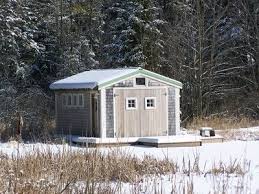
Insulating a shed may seem silly at first but your shed has many uses and adding insulation can further increase its usefulness. In essence, the shed on your property is an extension of your home. For many people it is used as seasonal storage and for others it can become a home away from home. Sheds are often used as workshops from wood working to motorcycle maintenance. Some are being converted to small recreational spots where couches, chairs, televisions and small appliances are being placed and used. The following article will help provide you with some useful hints and tips on how you could insulate your shed.
Siding and Air

One type of insulation is commonly known as an air barrier. These are sheets of treated plastic commonly found on the outside of a new home. This does not mean you cannot use it on your shed. The air barrier material helps keep air outside where it belongs and this keeps the internal temperatures at bay. The air barrier is wrapped around the shed and tacked in place. On top of the air barrier you would then place some sort of siding. The kind you use on the shed is irrelevant and can be plastic, wood or aluminum. The combination of the two keeps drafts out of the shed to create a more stable internal climate.

Using the Pink Stuff

Fiberglass is the most commonly used insulation material you can find. You install it in the inside of the building between the studs. You then have to cover the fiberglass with more wall material. Fiberglass is a good vapor barrier and will protect against humidity which can cause your wood in the shed to warp and potentially rot.

Wednesday, February 20, 2013

Want a Warm House? Don’t Just Insulate.

Air seal! The most boring word and concept that can make all the difference in energy saving and comfort. Granted, I once said rising damp was the least interesting but important building science term, I think we can make a case for air sealing. Why is it important (and possibly more important) than just adding more insulation?

What Folks Think the Problem Is


When a house is cold and uncomfortable, the first thought is adding more insulation. This is a compelling thought for a few reasons. First, it’s a problem most homeowners can solve in a weekend. Assuming we’re talking about an open attic, a trip to the local big box for some rolls of fiberglass or a blower machine is all the solution needed.

Second, it’s a known and understood problem. The average homeowner may not have a clue about installing a fuse box or replacing the wax ring on a toilet but we all (we think) understand that more insulation = warmer.

This thinking causes a common issue: a fluffy pink fiberglass band-aid over a gaping wound that allowing heat to stream out. Folks pile on the insulation but haven’t air sealed. I’ll say this as clear as I can: Do not add more air permeable insulation until you air seal.

What The Problem Actually Is


The building enclosure has several control layers: the thermal layer (insulation), air and vapor controls. If there are paths for air to escape, your walls and ceiling are only doing a part of the job.

Tuesday, February 19, 2013

Home Insulation Tips to Save You Money

High heating bills are something all of us have become accustom to. As the prices of heating gases and oil go up, homeowners pay more and more to keep their homes comfortable. Some of the price increases can be offset by increasing home insulation. Most homeowners can save 25% or more on home heating costs by making a few home improvements!


Older homes typically need a denver insulation upgrade much more frequently than newer builds. It is a mistake, though to assume that your newer home is as well-insulated as possible. Many homes built after 1980 have inferior insulation ratings because building codes are not up-to-date with DOE recommendations. Also, occasionally home-builders do try to save money on little things like insulation to lower build costs.


The following are simple and inexpensive steps you can take to lower your heating costs this winter:

Monday, February 4, 2013

Blanketing Your Water Heater


Heating your water is an expensive task that usually represents 20-40% of your utility bill.  Wrapping your water heater with an insulation blanket can save some of this money by slowing the rate of temperature drop as the water rests in your tank.  With the water staying hotter for a longer period of time, the water heater remains off more of the time and will save you money and energy use.

Not all water heaters need a blanket however, some energy-efficient models have a thick layer of insulation inside the tank that is sufficient enough.  Insulation blankets for water heaters less protected against heat loss are available at home centers and hardware stores.  You can install one in a few easy steps that requires a few cuts for fitting.  Some blankets are even manufactured to fit certain models and require no cutting at all.  For these blankets, you need to know your water heater size in gallons and usually the manufacturer.